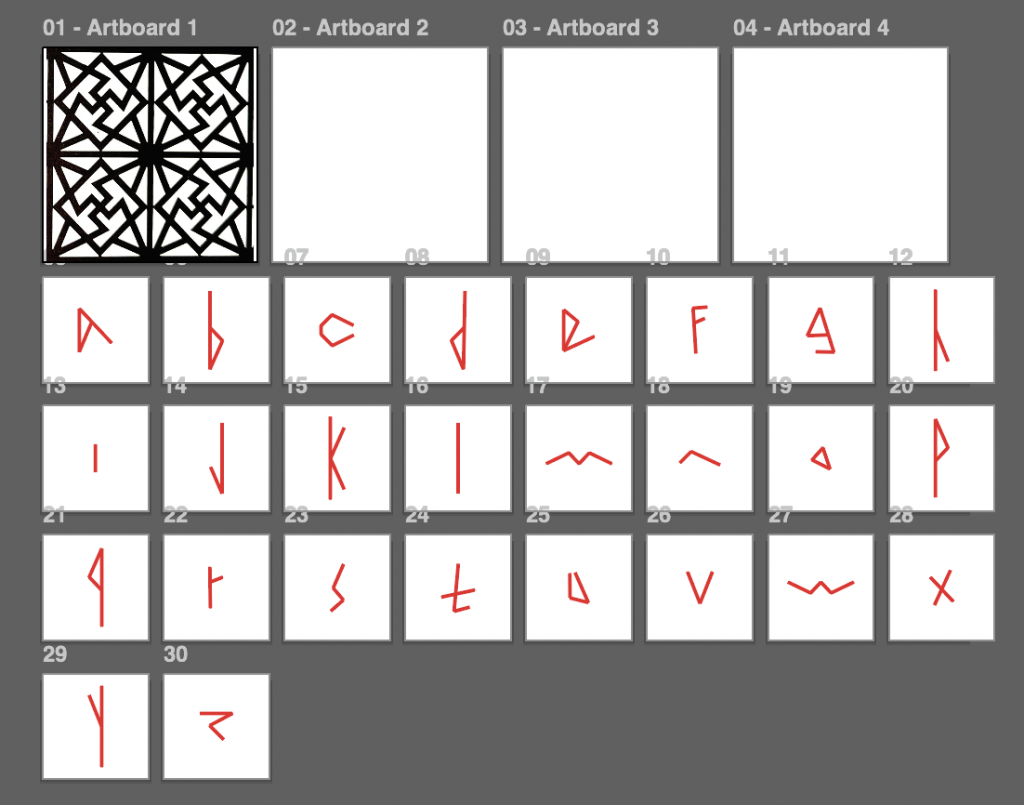
Research Reference:
Modularity: An Elemental Approach to Type Design By Aoife Mooney
- To understand my approach, I first looked at the relationship between type and culture. Modularity: An Elemental Approach to Type Designstates that typography isn’t just a neutral container for words. It is ‘active in culture’. Typefaces are like mirrors which reflect the ‘cultural climate’ of the era in which they were made. Type design also exists in a dialogue and it is influenced by society and, in turn, influences our concept of society.
- The book also describes Type design as ‘modular thinking’. It is the act of ‘deconstruction in order to reconstruct’. By breaking the alphabet down into its most ‘elemental’ parts, we attempt to find the essence of the form. This approach allows us to create a system where the parts can be rearranged to build something new.
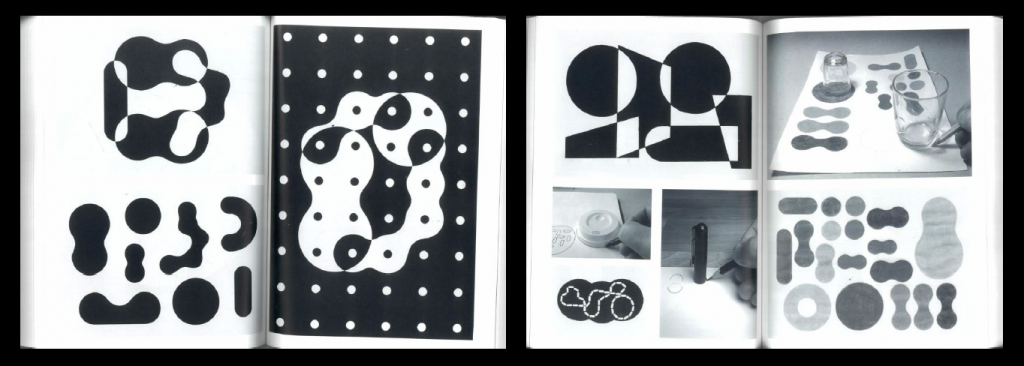
Karl Nawrot
- In looking for existing examples of this ‘elemental’ approach, I looked at the work of Karl Nawrot. His work often involves creating physical stencils or tools to generate letterforms. This aligns with the idea that modularity is about defining limits to find new expressions. His work shows that a rigid system doesn’t have to result in rigid-looking type but it can be experimental and fluid.
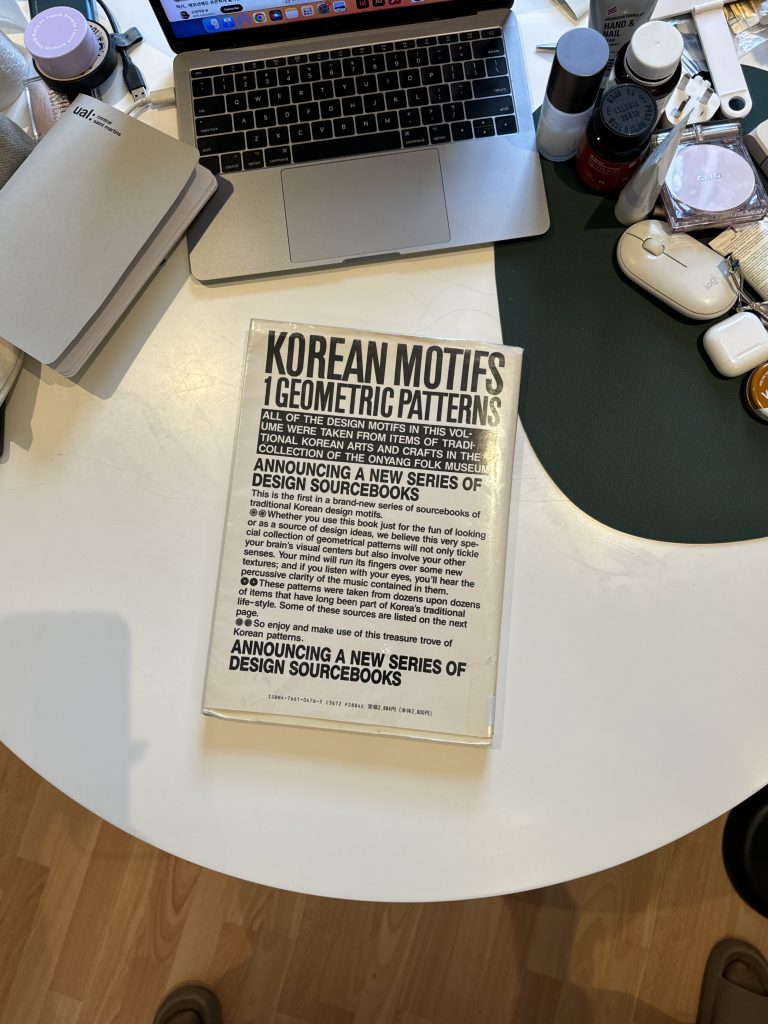
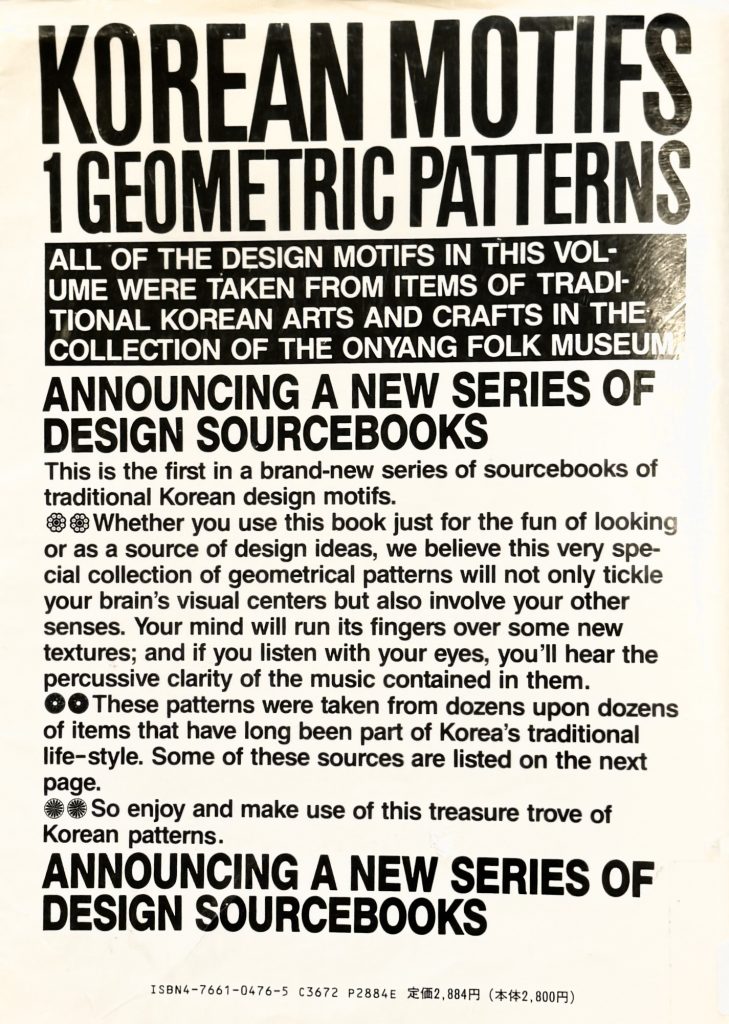
Korean Geometric Motifs
For my studio work, I utilized the book Korean Motifs 1: Geometric Patterns. This book documents traditional motifs from Korean art, architecture, and crafts that have been ‘somewhat neglected’ in modern design.
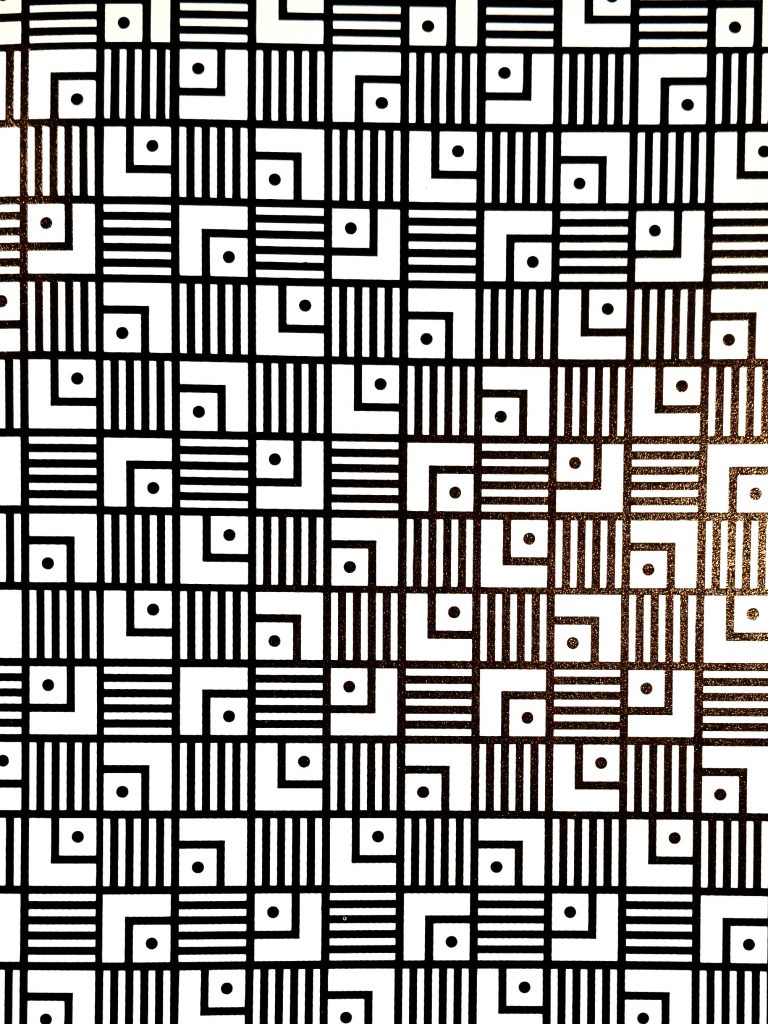
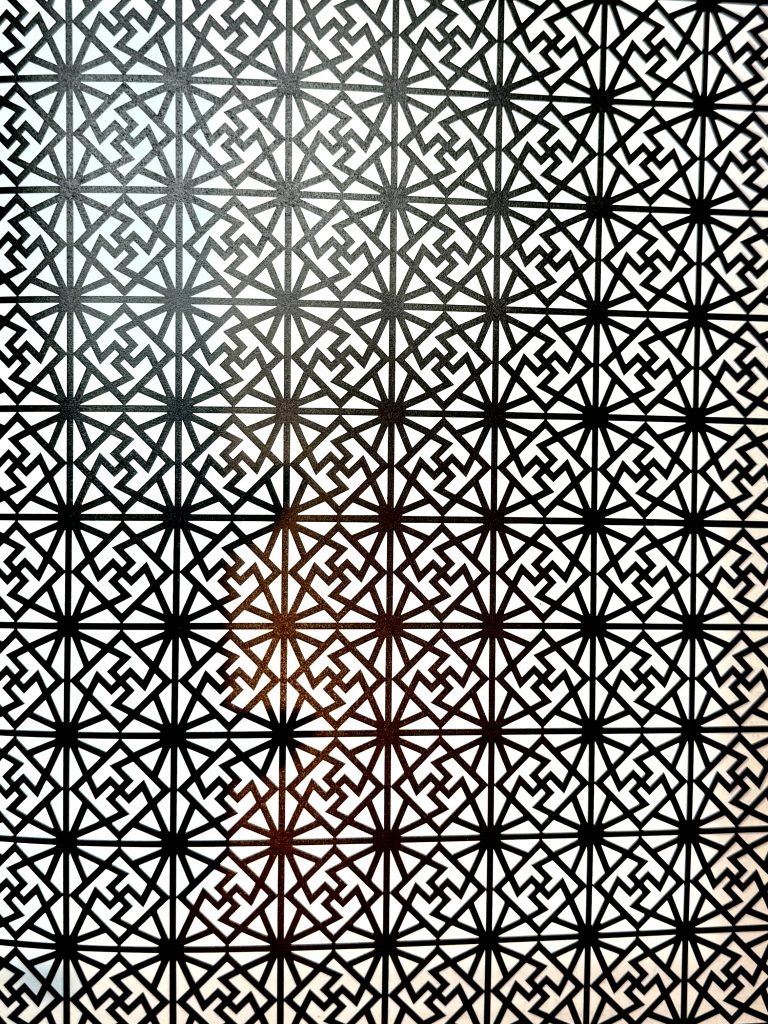
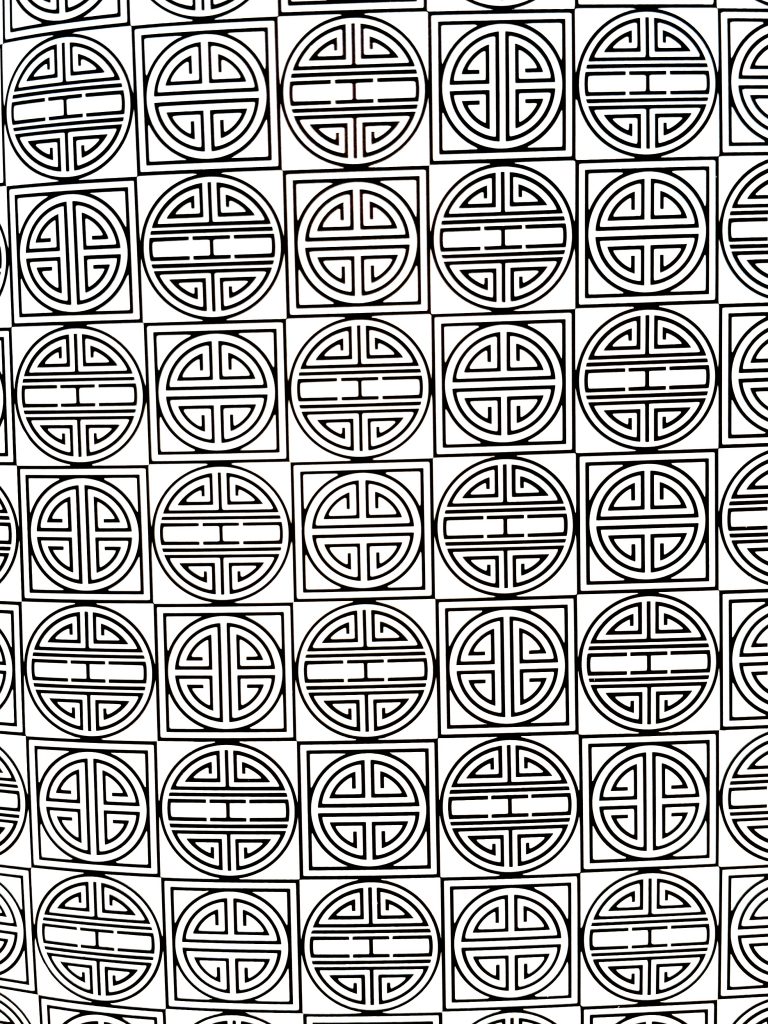
Process:
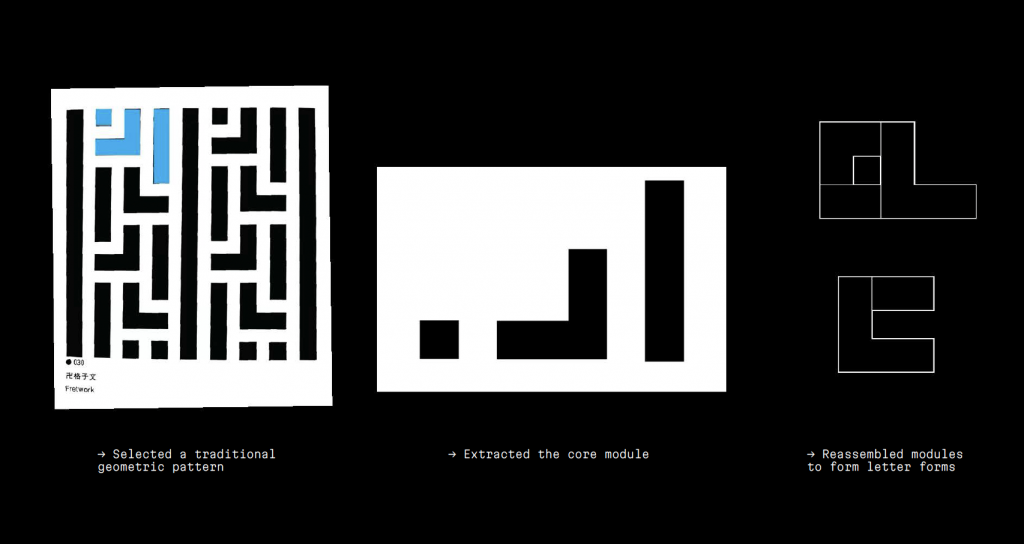
Modular Type Experiment 1
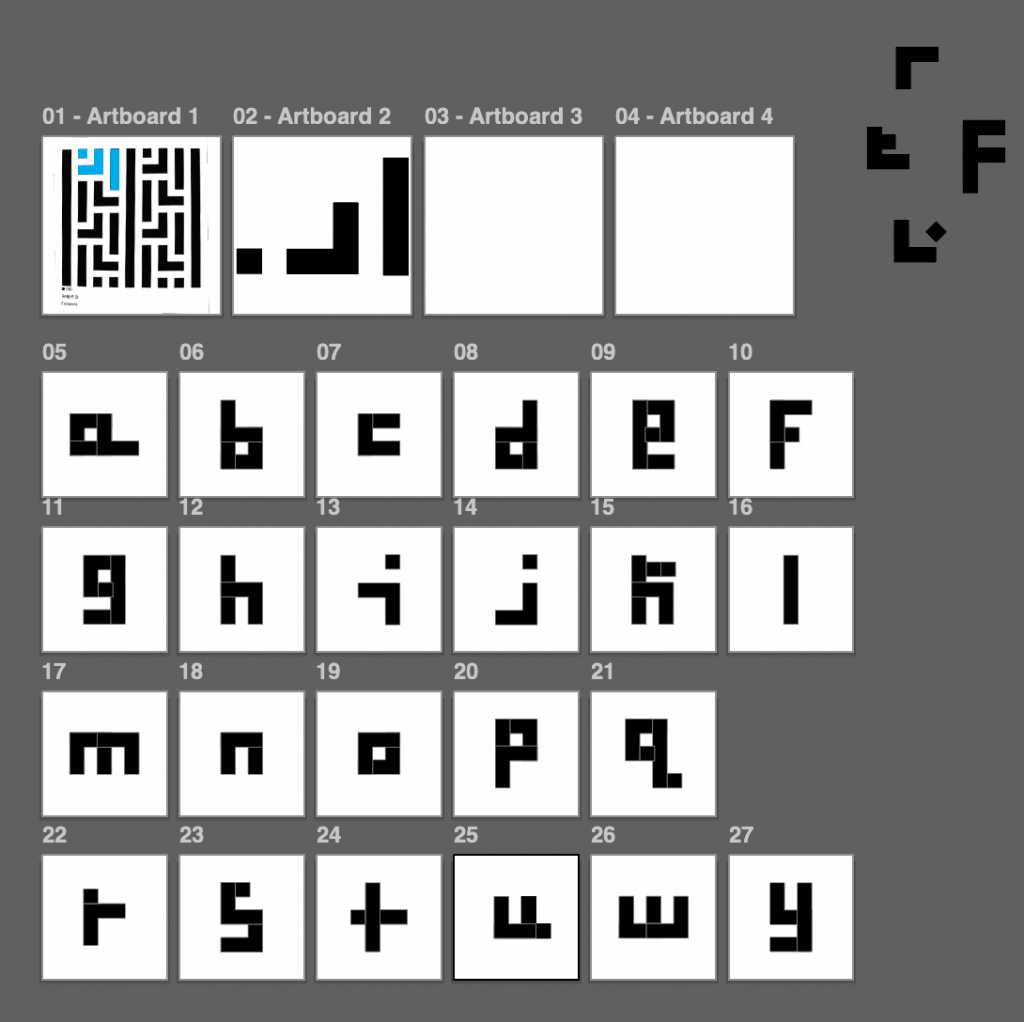
Modular Type Experiment 2